Why do cats have whiskers?

July 5, 2023

what is the function of cat's whiskers

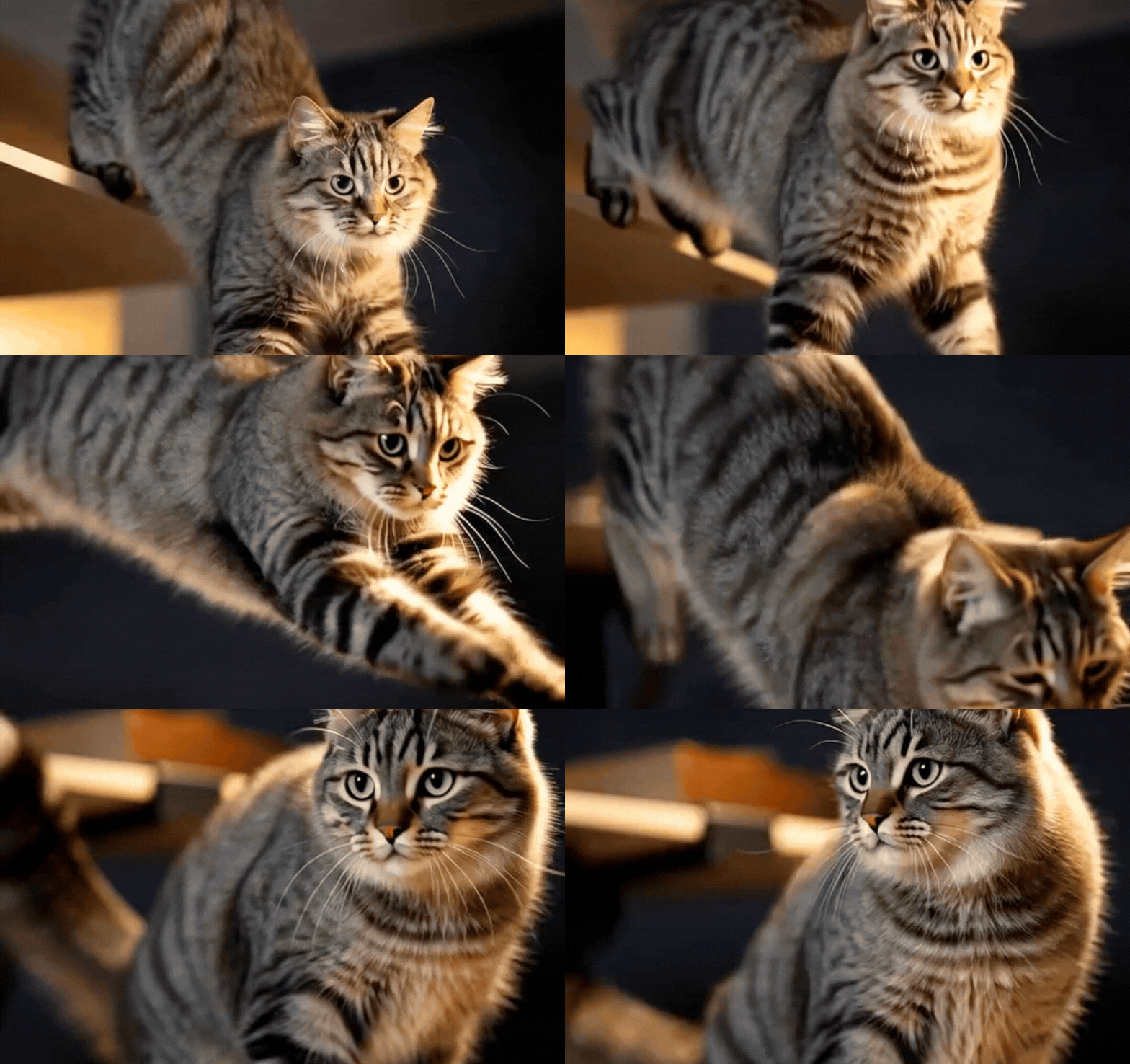
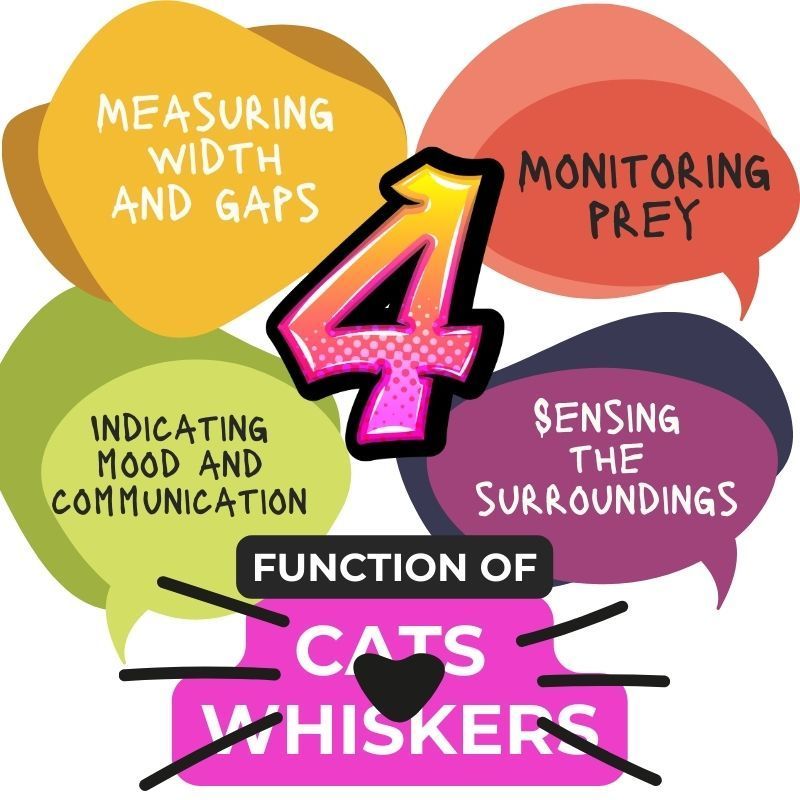
Cats have whiskers, or vibrissae, for several important reasons. Whiskers are highly specialized sensory organs that provide cats with valuable information about their environment. Here are 4 of the reasons cats have whiskers:
Cats are known to eat grass for several reasons here are 5

  1. Sensing the surroundings: Whiskers are extremely sensitive and can detect even subtle changes in the environment. They help cats navigate and explore their surroundings, particularly in low-light conditions. By brushing against objects and sensing changes in air currents, cats can determine the size, shape, and location of nearby objects, which aids in hunting, avoiding obstacles, and maintaining balance.
  2. Measuring width and gaps: The length of a cat's whiskers is approximately equal to the width of its body. By extending their whiskers, cats can assess if they can fit through narrow spaces or gaps before attempting to squeeze through. This ability helps them avoid getting stuck or causing injury.
  3. Monitoring prey: Whiskers assist cats during hunting. When stalking prey, the whiskers help them gauge the distance between themselves and their target, ensuring accurate pouncing and capturing.
  4. Indicating mood and communication: A cat's whiskers can also provide subtle cues about its mood or intentions. When a cat is relaxed, its whiskers are typically held outwards. However, if a cat feels threatened or agitated, its whiskers may flatten against its face, signalling a defensive or fearful posture.

It's important to note that while eating small amounts of grass is generally considered safe for cats, it's essential to ensure that the grass is free from pesticides or harmful chemicals. Additionally, if your cat eats excessive amounts of grass or shows signs of distress or illness after eating grass, it's advisable to consult with a veterinarian.


Thank you for reading this post. We hope that you found it interesting and hope to you visit this page again soon. For more information, fun facts and cute photos, please follow us on social media. 🐰

THANK YOU

Thank you for reading this post. We hope that you found it helpful and hope to you visit this page again soon. For more information, fun facts and cute photos, please follow us on social media. ❤️


Disclosure & Disclaimer: Some of the links in this blog may be affiliate links, which means we earn a small commission if you click through and make a purchase. This comes at no additional cost to you but helps support the continued production of content. We only recommend products and services we believe will add value to our audience. The content provided is solely for informational purposes. Any advice provided is based on personal experience and research and may not be suitable for everyone. Before implementing any advice, please consult with a professional to ensure it's appropriate for your specific situation. Thank you for your support.

British Shorthair cat grooming excessively with bald patch on flank, vet checking skin close-up, UK
By Guest Author June 16, 2026
Spot why your cat over-grooms or loses fur, from stress and fleas to allergies. UK pet care tips, vet advice, and home fixes for healthy coats fast
Detailed view of tabby cat's moist nose in soft UK home light, showing natural wet-dry texture for h
By Guest Author June 9, 2026
Curious why your cat's nose flips wet to dry? Learn normal reasons, UK home fixes and red flags in this evidence-based guide for worry-free feline care.
Brown and white rabbit in a UK indoor pen, with close up of healthy round droppings on hay, showing
By Guest Author June 2, 2026
Worried about soft or sticky rabbit poos and a dirty bottom? Learn UK friendly home care, diet fixes and clear vet warning signs to protect your rabbit’s delicate gut.
Rabbit with protective hutch netting in UK garden, showing vaccination record nearby, preventing myx
By Guest Author May 26, 2026
Discover what myxomatosis is, its deadly symptoms in rabbits, and proven UK prevention like vaccination, netting and quarantine. Safeguard your pet with these practical tips
Close-up guinea pig foot during safe nail trim with clippers, torch on dark claw, towel support and
By Guest Author May 19, 2026
Step-by-step guinea pig nail trimming guide for UK owners, tools, quick safety, stress-free holds and tips to prevent overgrowth every 3-4 weeks at home
Close up of a tabby cat happily using a tall sisal scratching post beside a protected fabric sofa in
By Guest Author May 12, 2026
Worried about your cat scratching the sofa? Learn calm, practical UK friendly ways to redirect scratching, protect furniture and support healthy feline behaviour at home.
Adorable tabby kitten pawing in clean shallow litter tray inside cosy UK home utility room, demonstr
By Guest Author May 5, 2026
Struggling with kitten accidents? Our step-by-step UK guide covers tray choice, cleaning routines, troubleshooting and tips for litter training success in days. Patience and positivity key for clean homes.
Close-up of a healthy guinea pig eating fresh red bell pepper slice, showing natural vitamin C sourc
By Guest Author April 28, 2026
Do guinea pigs need vitamin C supplements? Learn why they cannot make their own, best natural food sources, signs of deficiency and when supplements help. Practical UK care guide.
British Shorthair cat showing pain signs like hunched posture, flattened ears, and limping on home r
By Guest Author April 21, 2026
Spot subtle signs of pain in cats like hiding, limping, poor grooming, and aggression. Practical UK home tips and vet insights help owners act early for better feline comfort
A worried Golden Retriever alone in a cosy UK living room, pawing at door with toys scattered, illus
By Guest Author April 14, 2026
Discover what causes separation anxiety in dogs, from genetics to life changes, with practical UK tips for prevention and relief. Ease your pet's distress today.